
Speech Therapy
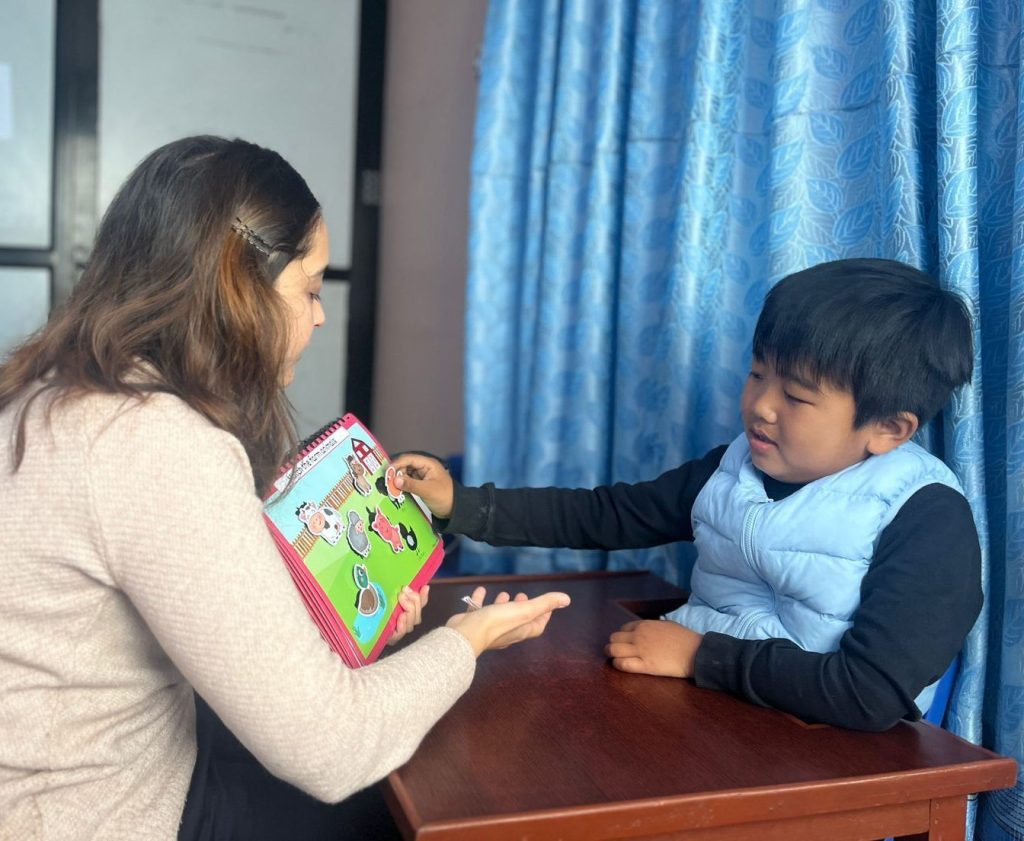
Children and adults with autism may have difficulty with a variety of speech and language skills, such as:
- Receptive language: Understanding what is being said to them
- Expressive language: Using words and sentences to express their thoughts and feelings
- Articulation: Producing sounds correctly
- Pragmatic language: Using language in social situations
Speech therapy is a treatment approach to develop/improve communication skills which might be verbal or nonverbal. Speech-Language pathologist diagnoses/identifies and treats communication disorders. Speech therapy is not only concerned about the words spoken but treats the whole communication process of understanding others and expressing self. Speech pathologist teaches the child to build communication skills that may be in the form of verbal (spoken words) or non-verbal (gestures, body language, sign language, picture exchange communication system, communication devices).They make the children with autism to understand language in social context, produce and pronounce words correctly, connect words to cues, understand body language and gestures and etc. Early diagnosis and treatment is the key for the children with autism to adapt the communications skills more effectively and efficiently.
The overall goal of speech therapy is to help the individual with autism to communicate in more useful and functional ways. Each autistic child is different from one another and so is their communication abilities which is best identified and used by speech language pathologists together with the active participation and support of parents of individuals with autism.